3 Golf Grip Types
1. Baseball Grip (10-Finger)
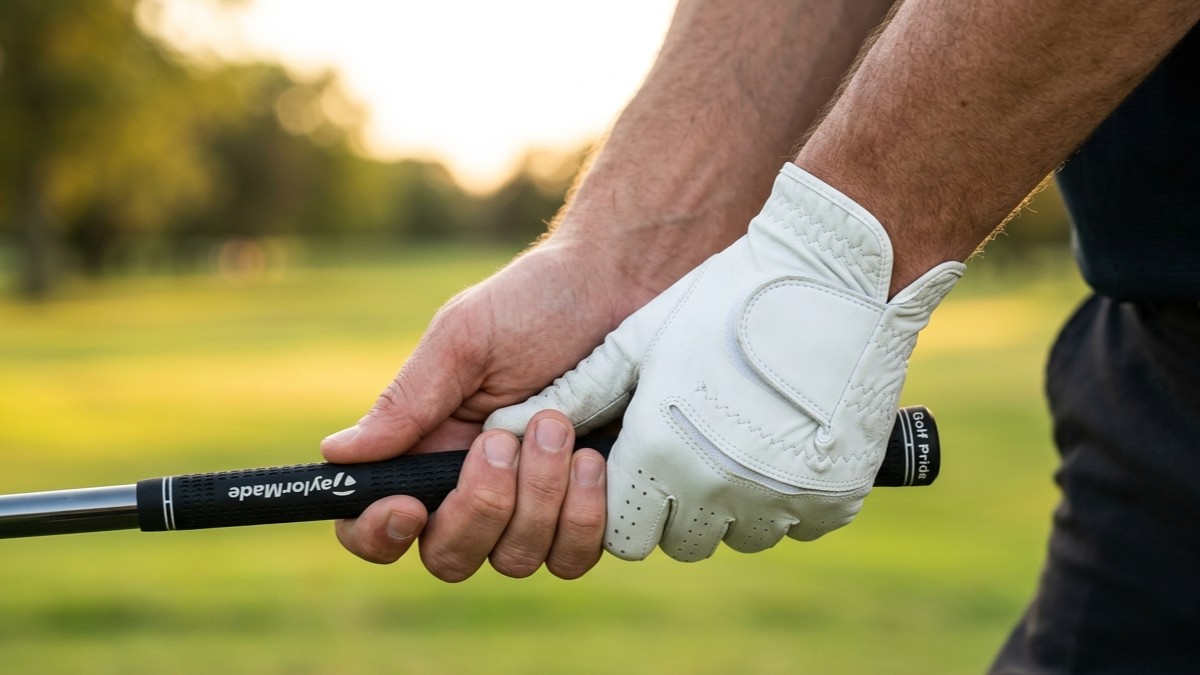
What it looks like: All 10 fingers touch the club. Both hands sit side by side with no connection between them exactly like gripping a baseball bat.
How to do it: Place your lead hand (left hand for right-handers) near the top of the grip. Your thumb points slightly down the shaft. Then place your trail hand directly below it. No overlapping. No interlocking. Just two hands, side by side, every finger on the club.
Who it suits: Brand new golfers, juniors, seniors with stiff hands or arthritis, and anyone with smaller hands who struggles with the other styles.
Sincere truth: It’s the most comfortable grip and the easiest to learn. The downside is that your hands can work independently during the swing, which creates inconsistency. Most golfers outgrow it within the first year but it’s a perfectly fine place to start.
2. Overlap Grip (Vardon Grip)
What it looks like: The pinky finger of your trail hand sits on top of the gap between the index and middle fingers of your lead hand. It’s a small but important connection.
How to do it: Place your lead hand on the club first. Then bring your trail hand down and let the pinky rest not squeeze, just rest — in the groove between your lead hand’s index and middle finger. Your two thumbs should point straight down the shaft, almost forming a V shape.
Who it suits: Most adult golfers. Players with larger hands. Anyone who wants more wrist freedom and a cleaner release through impact.
Sincere truth: Around 90% of Tour players use this grip. Arnold Palmer, Ben Hogan, Phil Mickelson — all overlap. It keeps the hands unified without locking them together, which allows the wrists to hinge and release naturally. This is the grip most instructors will teach you.
3. Interlocking Grip
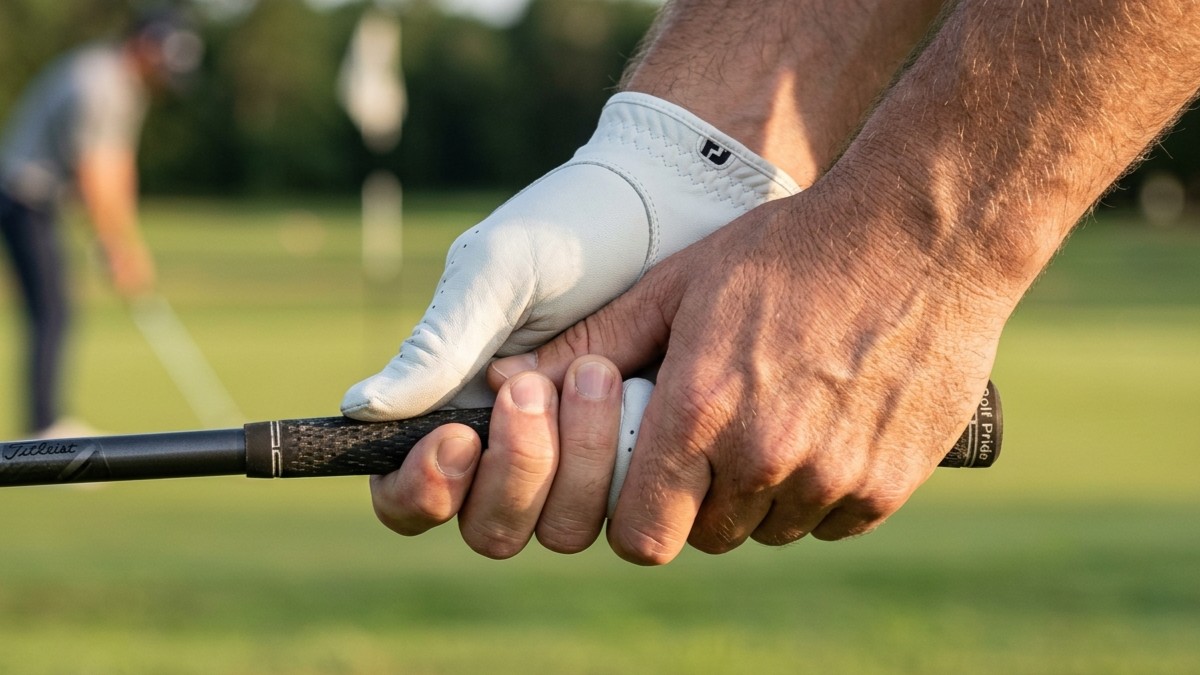
What it looks like: The pinky of your trail hand actually weaves between the index and middle fingers of your lead hand. The fingers lock together rather than overlap.
How to do it: Same starting position as the overlap — lead hand first, trail hand below. But instead of resting your pinky on top, tuck it between your lead hand’s index and middle fingers. Your lead index finger sits between your trail hand’s pinky and ring finger. The hands physically lock together.
Who it suits: Golfers with smaller hands, shorter fingers, or anyone who feels like the overlap grip leaves the hands feeling disconnected.
Sincere truth: Tiger Woods uses this grip. So does Rory McIlroy. So does Jack Nicklaus. If it is good enough for them, worth trying. The downside is some golfers squeeze too hard trying to maintain the lock, which creates tension exact thing you’re trying to avoid
Grip Pressure: The Part Nobody Talks About
Knowing which grip style to use only solves half the problem.
The other half is how hard you hold the club.
Most beginners grip way too tight. Death-grip tension travels up your forearms, kills your wrist hinge, and slows your clubhead at the moment it needs to be fastest.
A simple way to think about it: hold the club like you’re holding a tube of toothpaste with the cap off. Firm enough that it doesn’t fly out of your hands. Light enough that you’re not squeezing paste everywhere.
Pressure should be consistent throughout the swing. Don’t grip tighter on the backswing. Don’t squeeze harder at impact. Stay even.
Strong, Neutral, or Weak Grip?
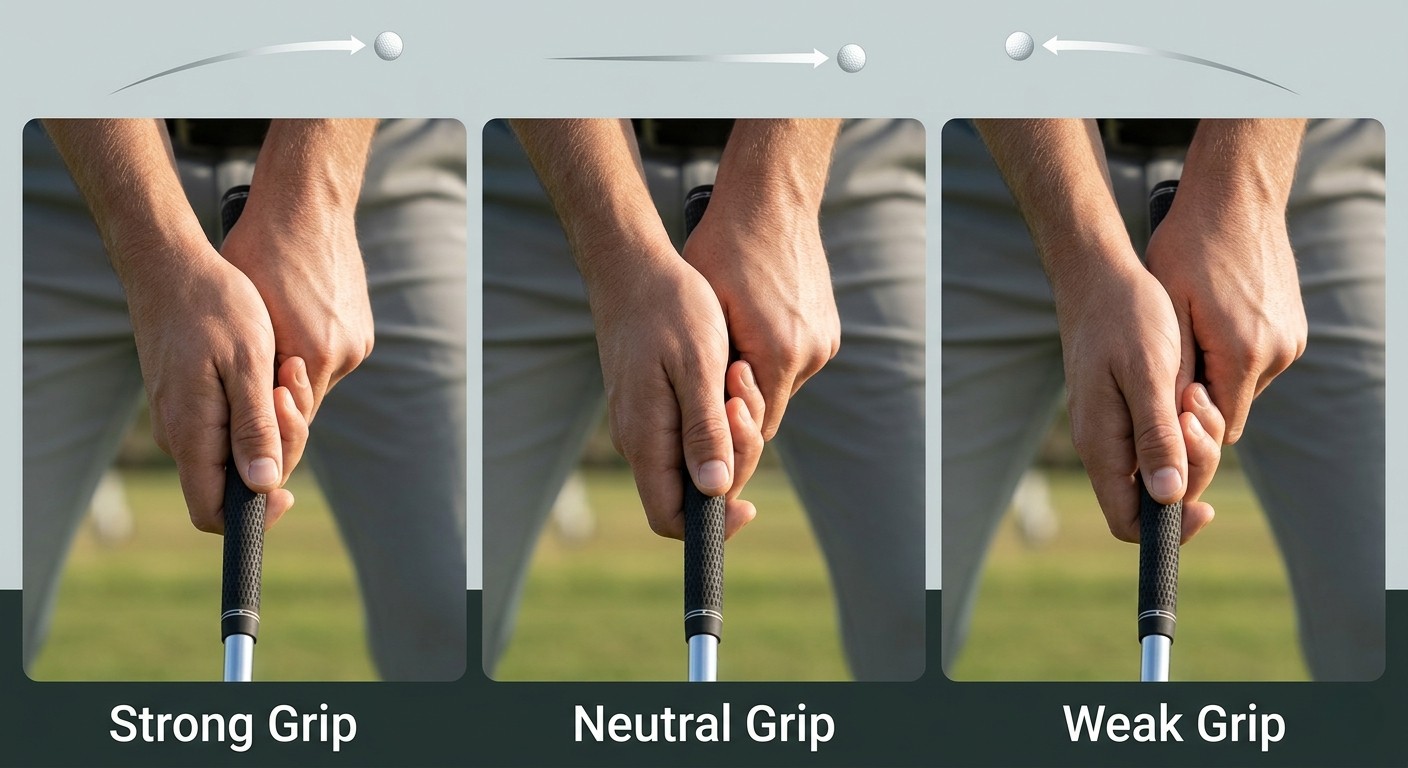
This is separate from grip style it’s about hand rotation on the club.
Strong grip: You can see 3 or more knuckles on your lead hand when you look down. Tends to close the clubface, which can help golfers who slice.
Neutral grip: You see 2 knuckles on your lead hand. This is the standard starting point most instructors recommend.
Weak grip: You see 1 knuckle or fewer. Opens the clubface, which can worsen a slice but help a hook.
If your ball is consistently curving right (for right-handers), try rotating your lead hand slightly clockwise to strengthen the grip. If it’s hooking left, rotate slightly counter-clockwise to weaken it.
Small adjustments make a significant difference in ball flight.
Which Grip Should You Start With?
If you’re brand new start with the baseball grip. Get comfortable. Focus on your swing.
If you’ve been playing a few months try the overlap. It’s what most instructors teach and what most experienced golfers use. Give 4-6 weeks before judging it.
If the overlap feels loose or disconnected try interlocking. Smaller hands often do better here.
There’s no universally correct answer. What matters is that your hands feel unified, your grip pressure stays light, and you can repeat the same position every single time you address the ball.
Consistency always beats perfection.