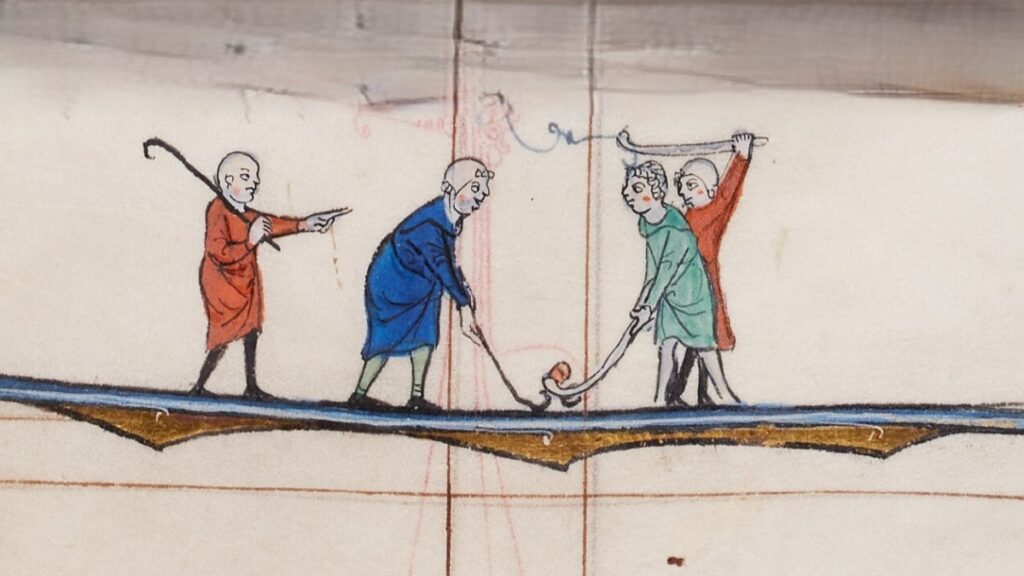
Golf is one of the world’s most popular sports. It is a game where players use clubs to hit a ball into a series of holes on a course, using as few strokes as possible. What makes golf different from most other sports is that there is no standard playing area – every course is unique, and learning to handle different terrains is a big part of the challenge.
A Brief Golf History
The modern game of golf began in 15th century Scotland. The first written record of golf is from 1457, when King James II of Scotland actually banned the game because it was distracting people from archery practice. The ban was lifted in 1502 after King James IV took up golf himself.
The famous 18-hole golf course we know today was created in 1764 at the Old Course at St Andrews, Scotland. Members modified the course from 22 holes down to 18, and this became the worldwide standard.
The world’s oldest golf tournament, The Open Championship, was first played in 1860 in Ayrshire, Scotland. Golf was even introduced to the United States in 1888 when two Scotsmen set up a hole in an orchard in New York.
Interestingly, some historians believe golf may have ancient roots. Some trace it back to a Roman game called paganica, where players hit a stuffed leather ball with a bent stick. Others point to a Chinese game called chuiwan, played between the 8th and 14th centuries, which involved striking a small ball into a hole.
The Golf Course

A standard golf course has 18 holes, though 9-hole courses also exist and can be played twice for a full round. Each hole on the course includes:
- A tee box – where every hole begins
- A fairway – the open, mowed grass area between the tee and the green
- Rough – tall grass on the sides that makes play harder
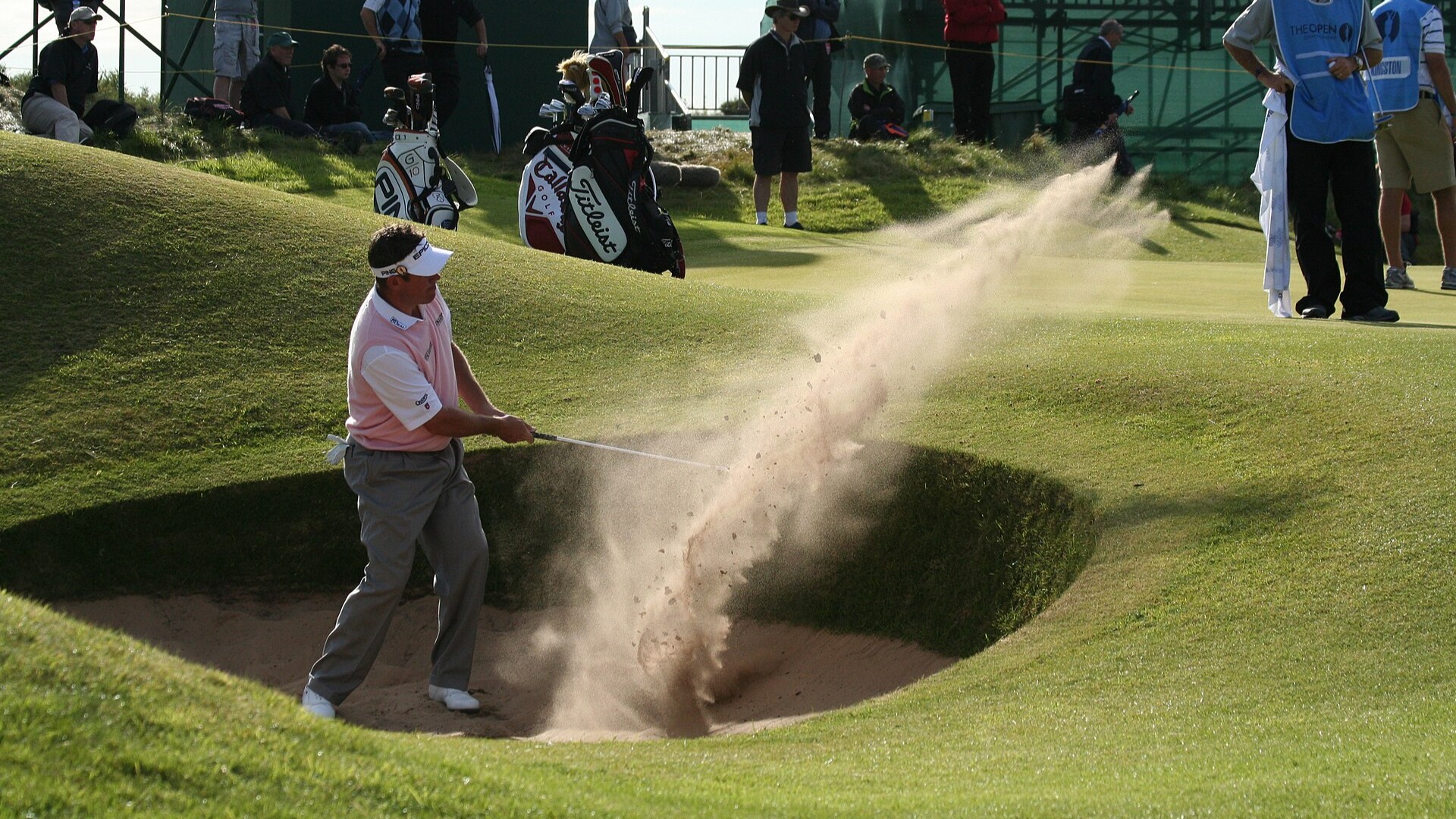
- Hazards – sand bunkers, water (ponds, streams), and other obstacles
- A putting green – the smooth surface surrounding the hole (cup)
Some holes go straight from tee to green. Others bend left or right – this is called a “dogleg.” If it bends both ways, it’s called a double dogleg.
Golf courses are often designed to match the natural landscape – along coastlines (called links courses), through forests, among hills, or even in deserts.
How the Game Is Played
A round of golf usually consists of 18 holes played in order. A typical group has 1-4 players. A 9-hole round typically lasts around two hours, whereas a complete 18-hole round usually takes about four hours.
Every hole starts with the player hitting the ball from the tee box. Players can use a small peg called a tee to lift the ball slightly off the ground for this first shot. From there, players continue hitting the ball down the fairway until it reaches the green, where they use a putter to roll the ball into the cup.
The main goal: get the ball in the hole in as few strokes as possible.
Players travel the course either by walking (sometimes with a caddie or golf trolley) or by riding in a golf cart. A full round can cover more than 5 miles (8 km) of walking.
Golf Clubs and Equipment
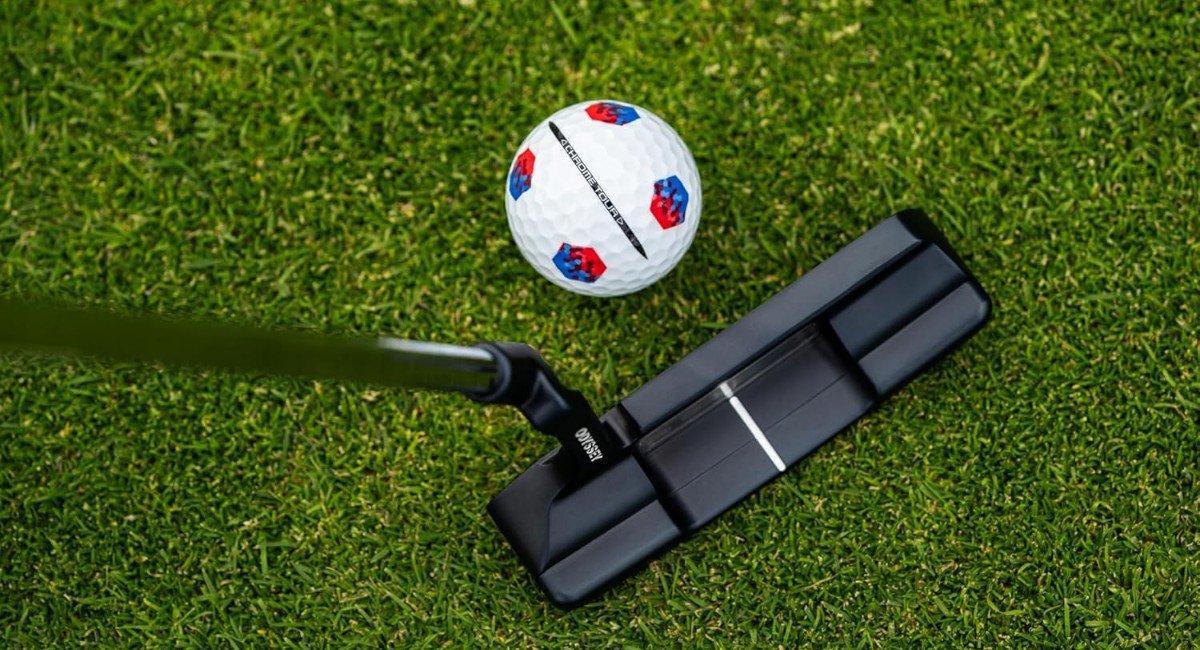
A player may have no more than 14 clubs in their bag during a round. Golf clubs come in several types:
- Woods – Long-shafted, large-headed clubs for long-distance shots. The “driver” (1-wood) can hit the ball over 300 yards in professional hands.
- Irons – Shorter clubs used for a wide range of shots, especially approaching the green.
- Putters – This club is used on the green to putt the ball into the hole.
- Hybrids – A mix of woods and irons that give more distance and are easier to hit.
Golf balls are round with tiny dimples on the surface. These dimples actually help the ball fly farther by reducing air resistance. Players also wear spiked golf shoes for better grip.
Scoring: How Points Work
Each hole on a course has a par number – the expected number of strokes a skilled golfer should need to complete it. Par is usually 3, 4, or 5 strokes per hole.
Here are the score terms every golfer should know:
Score Relative to Par Name
4 (four under par) – Condor
3 (three under par) – Albatross (Double Eagle)
2 (two under par) – Eagle
1 (one under par) – Birdie
Even Par
+1 (one over par) – Bogey
+2 (two over par) – Double Bogey
+3 (three over par) – Triple Bogey
A hole-in-one (also called an “ace”) is when a player sinks the ball in a single stroke from the tee. A condor is the rarest score in golf – only five have ever been verified.
A standard 18-hole course usually has a total par of 70 to 72.
Types of Shots
Different situations call for different types of swings:
- Drive (full swing) – Used off the tee to send the ball as far as possible.
- Approach (¾ swing) – Used for medium-to-long distances where accuracy matters more than distance.
- Chip (half swing) – A short shot near the green to land the ball safely and let it roll toward the hole.
- Putt – A low, smooth stroke on the green used to roll the ball into the hole.
Good golf requires accuracy and consistency, not just power. A shorter but straight drive is often better than a long one that lands in rough or out of bounds.
Game Formats
Stroke Play
Every stroke you take is counted, and the player with the lowest total wins. This is the format most often used in professional golf.
Match Play
Two players or teams compete hole by hole. Whoever wins the most holes wins the match – total strokes don’t matter.
Other Popular Formats
- Stableford – Players earn points based on how they score on each hole. A bogey = 1 point, par = 2 points, birdie = 3 points, and so on. Highest points wins.
- Scramble – Each player on a team hits a shot, the best shot is chosen, and all players play from that spot. Great for casual and charity tournaments.
- Foursomes (Alternate Shot) – Two-player teams share one ball, taking turns hitting it.
- Four-Ball – Each player plays their own ball; the best score on the team counts for each hole.
Handicap System
A handicap is a number that measures a golfer’s skill level. It allows players of different abilities to compete fairly. A lower handicap means a better player. A golfer with a handicap of 0 is called a scratch golfer.
In 2020, the USGA and R&A introduced the World Handicap System to standardize handicaps globally.
Rules and Penalties
Golf rules are set by The R&A and the United States Golf Association (USGA). The rules were completely rewritten and updated in January 2019.
The core principle of golf rules is simple: play the ball as it lies, play the course as you find it, and if you cannot do either, do what is fair.
Common penalties include:
- Lost ball or out of bounds – 1 stroke penalty
- Moving your own ball accidentally – 1 stroke penalty
- Hitting the wrong ball – 2 stroke penalty
- Cheating or signing for a wrong score – Disqualification
Professional Golf
Most professional golfers work as club or teaching professionals. A small number compete as tournament pros on major tours around the world.
The biggest professional tours include:
- PGA Tour (USA) – the most prestigious men’s tour
- European Tour – attracts top international players
- LPGA Tour (USA) – the leading women’s tour
- PGA Tour Champions – for men aged 50 and over
The Four Men’s Major Championships
These are the most important tournaments in men’s golf:
- The Masters – Played every year at Augusta National Golf Club in Georgia, USA (since 1934)
- The PGA Championship – Held at various US courses
- The U.S. Open – Held at various US courses
- The Open Championship – Held at courses around the UK (the oldest major, since 1860)
Women’s Major Championships

The LPGA Tour recognizes five women’s majors: the Chevron Championship, Women’s PGA Championship, U.S. The Women’s Open, the Women’s British Open, and the Evian Championship.
Golf’s Global Reach
As of 2019, there are about 38,864 golf courses worldwide. The United States alone has over 16,000 – about 43% of all courses globally. The countries with the most golf courses per person include Scotland, New Zealand, Australia, Ireland, and Canada.
In the US, women made up 25% of golfers in 2021, up from 19% in 2011. Junior female golfers account for 35% of youth players – showing that the sport is becoming more inclusive.
Golf even reached outer space in February 1971, when astronaut Alan Shepard became the first person to play golf on the Moon. He smuggled a club head and two balls onto Apollo 14 and took a couple of swings on the lunar surface.
Women in Golf
Women have played golf for centuries. Mary, Queen of Scots is popularly known as the first woman golfer, reportedly playing in 1567. The first organized women’s golf club was at St Andrews in Scotland, established in 1867.
The Ladies Professional Golf Association (LPGA) was formed in 1950 to promote the sport and give women competitive opportunities. Despite progress, women’s golf still faces a significant pay gap compared to men’s golf as of today.
Final Thoughts
Golf is more than just a sport – it is a game of patience, strategy, and skill. Whether you are a beginner hitting your first drive or a seasoned player chasing a birdie, golf offers a unique challenge every single time you step on the course. With courses in nearly every country and a global professional scene, golf continues to grow and welcome new players from all backgrounds.