Steel vs Graphite Shafts – This Matters More Than the Brand
When I ask beginners what they know about shaft types, most say nothing. That’s the wrong place to be because shaft type affects every shot you take.
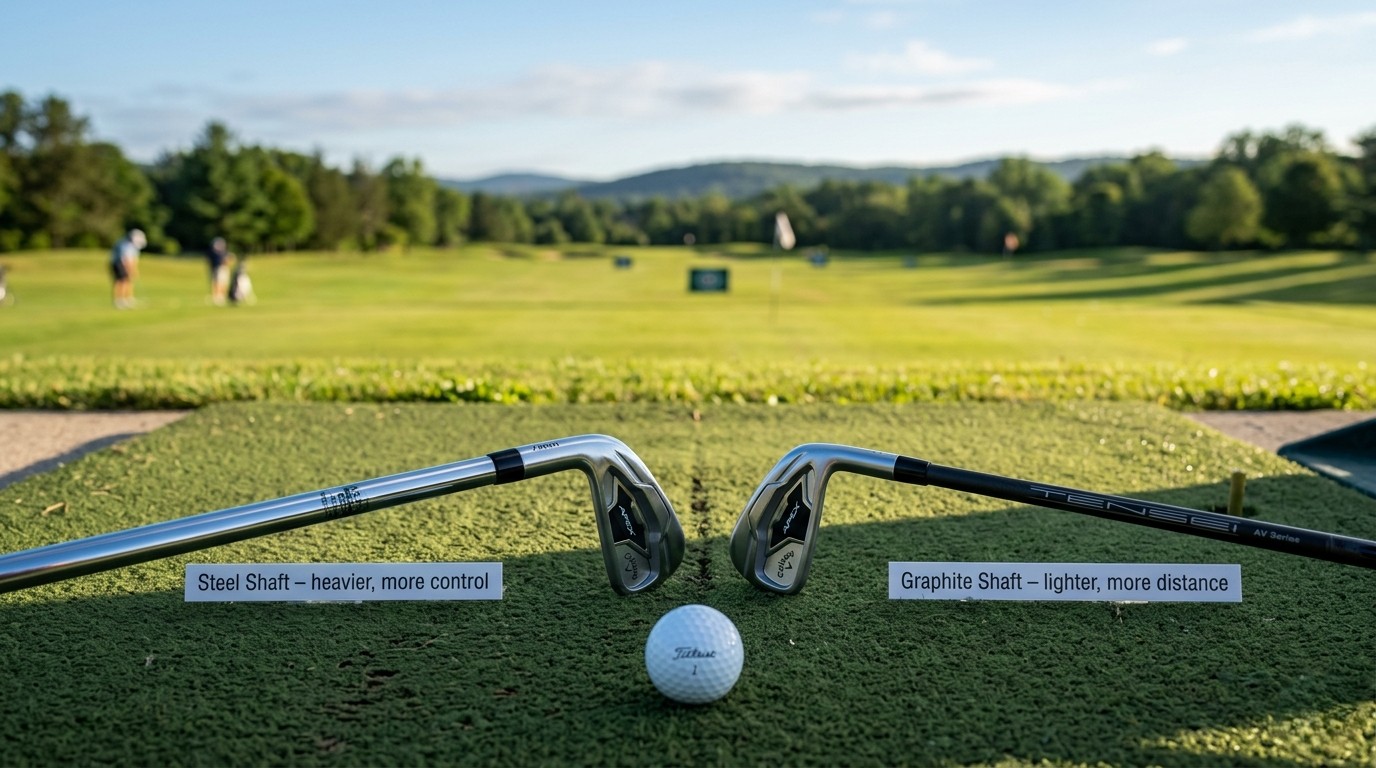
Steel shafts are heavier, more durable, and cheaper. They give you more feedback when you mishit – which is actually useful when you’re learning. Most beginner iron sets come with steel as the default.
Graphite shafts are lighter. Lighter means faster swing speed, which means more distance. If you have slower swing speed (most beginners do), graphite helps. It’s also easier on your joints if you’re older or have wrist issues.
Here’s my honest take: for irons, steel is fine when you’re starting out. For your driver and woods, go graphite. That’s where shaft flex and weight actually change how far the ball goes.
Speaking of flex – shafts also come in different flex ratings: Ladies (L), Senior (A), Regular (R), Stiff (S), and Extra Stiff (X). If you’re a beginner with a slow to average swing speed, Regular flex is your default. Don’t buy Stiff. It won’t help you.
Forgiving Clubs Are Not a Shortcut – They’re Smart
There’s a type of club called a “game improvement” club. It has a larger clubface, a wider sole, and more weight distributed around the edges. This makes the sweet spot bigger.
Bigger sweet spot = more forgiveness on off center hits.
As a beginner, you will hit off center a lot. That isn’t a criticism – it’s just true. A forgiving club doesn’t fix your swing, but it stops you from being punished every time you mishit. That keeps the game enjoyable while you’re still learning.
Brands like Callaway, Wilson, Cleveland, and Cobra all make beginner-friendly sets with forgiving club heads. I’d look at any of these before spending big on a “tour” or “players” iron set. Those clubs punish inconsistency. You’ll feel every bad shot.
What to Expect to Spend

Here’s I’ll be straight with you.
Under $200: You can find decent complete sets in this range – Wilson, Pinemeadow, and Callaway Strata are often recommended. They’re not premium, but they work. If you’re not sure golf will stick, start here.
$200 to $400: This is the sweet spot for beginners who are serious about the game. You get better shafts, more forgiving heads, and a bag included. Callaway, Cleveland Launcher sets, and TaylorMade SIM Max packages live in this range.
$400 to $700: If you know you’re committed, this range gets you close to what a mid-handicap golfer plays. Better feel, better materials, more customization options.
One thing I’d avoid: buying a cheap no-name set from an unknown brand just to save $30. The quality difference is real. Poor clubs make learning harder, and at some point you’ll replace them anyway.
Also, don’t buy used clubs for your first set unless you know exactly what you’re looking at. Worn grooves, bent shafts, and mismatched flex ratings can all slow your progress.
New vs Used: A Quick Note
Used clubs can be a good deal but only if the clubs are in decent condition and match your swing profile. If you know a golfer who can assess them with you, great. Otherwise, a budget new set from a reputable brand is safer.
Used sets on platforms like eBay, Facebook Marketplace, or Global Golf can save you 40-60%. If you go that route, check for: rust on grooves, cracks near the hosel (where shaft meets head), and grip wear. Grips can be replaced cheaply, but grooves and hosel cracks are harder to fix.
Hybrids Are Better Than Long Irons for Beginners
If your set comes with a 3-iron or 4-iron, consider swapping one of them for a hybrid.
Long irons (3 and 4) are hard to hit well. They’re thin, the sweet spot is tiny, and they require a confident, consistent swing. Most intermediate golfers struggle with them.
A hybrid has a wider base and more weight at the back. It’s easier to get the ball airborne, especially from the rough or tight lies. Practically every beginner coach I’ve spoken to says the same thing: ditch the 3-iron, pick up a hybrid.
A Putter Is the One Club Worth Spending More On

Here’s something that surprised me when I started: about 40% of shots in a round are putts.
Your driver gets more attention, but your putter affects your score more. I’ve seen beginners spend $400 on a driver and grab a $15 putter as an afterthought. That’s backwards.
You don’t need to spend hundreds on a putter, but don’t pick one randomly. Go to a store. Hold a few. Some putters have a blade style (thin, classic), others have a mallet style (wider, more stable). Mallets are more forgiving and easier to align – a better choice for most beginners.
Spend at least $50 to $80 on a putter from a reliable brand. Odyssey, Wilson, and Ping all make solid entry-level options.